

Raglan Castle
Worth a visit? Absolutely!...and here is why.

By the mid-19th century the gripping tentacles of ivy held tight to the walls of the once mighty castle, covering it in a carpet of green and creating an evocative sight for photographers, painters and writers. The sightseers, wandering the ruins with their guidebook in hand (in its 11th edition in 1829), no doubt tried to imagine the castle as it had been when the future king Henry VII had resided here in the late 1400s as a child, or what it would have been like to be inside as Oliver Cromwell’s canons had bombarded its walls in 1646.
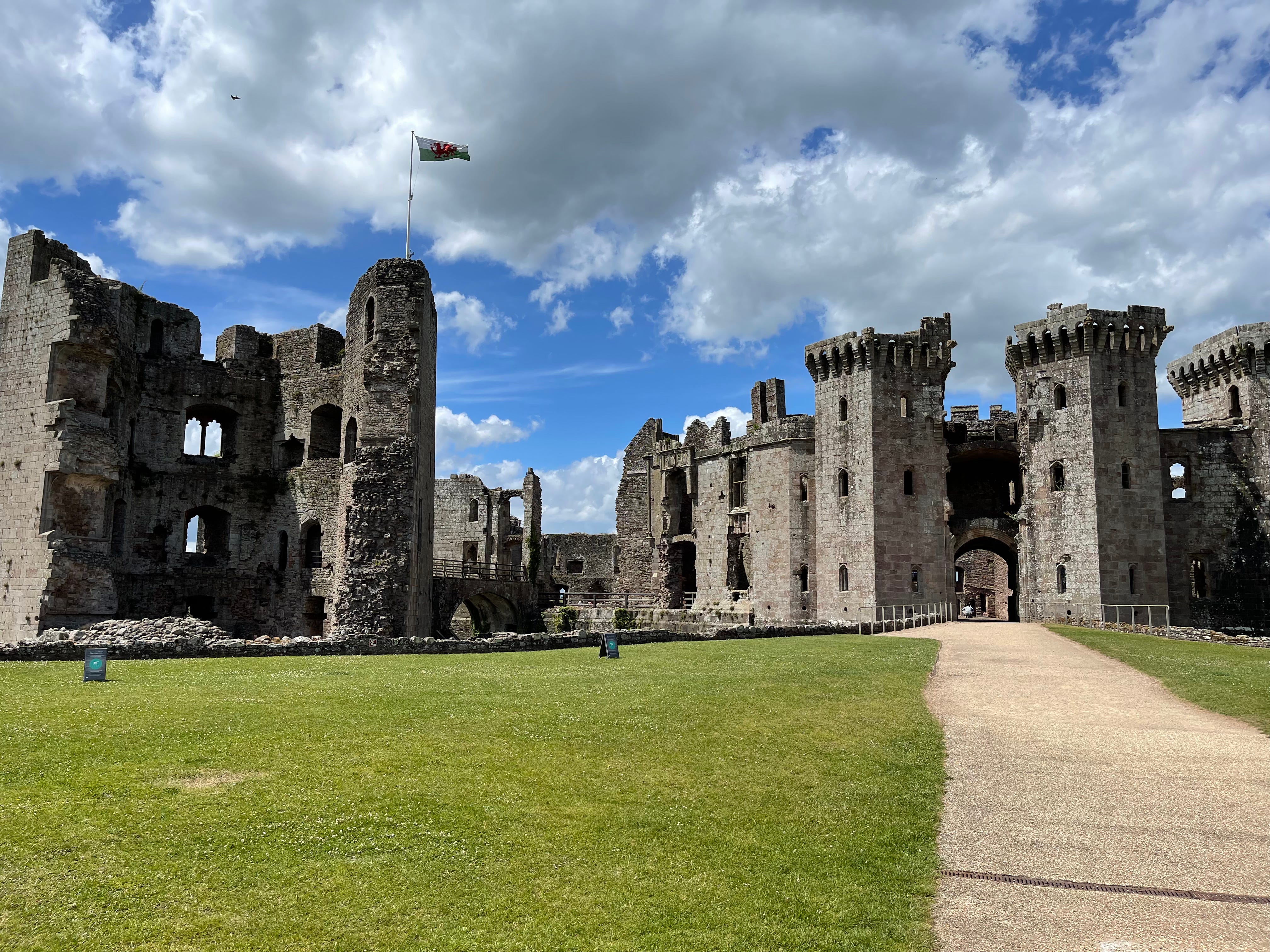
The decline of Raglan Castle, in South Wales, began in the death throws of the British Civil Wars. A Royalist stronghold, it was bombarded with canon fire from ‘Roaring Meg,’ a specially forged mortar which fired 200lb (90kg) gunpowder-filled shells, used by the Parliamentarians. Like many castles which had held for the monarchy, it was purposely destroyed, ‘slighted’ after its surrender in August 1646, to prevent it being used again (and surely, as punitive punishment). Although the family regained possession following the restoration of the monarchy, it was never repaired, or lived in again. For centuries it was pilfered for building materials and otherwise left to its certain demise. (Read more about that in my article ‘The weary and defeated marquis awaited his unwanted visitors...How Raglan Castle fell’)
You could be forgiven for thinking that Raglan Castle would have little left to see or interest the visitor. Thankfully this is not the case. A 50-minute drive north-east of Cardiff, Raglan sits in the picturesque rolling Welsh countryside, rising up with as much grandeur as it can muster.
At the end, for paid subscribers*, I have extra photos from inside the castle an also of the undermined keep. In a separate, follow-up post I will be sending a suggested history trail itinerary for this part of the country.

In this article we will explore my highlights of the castle, still available for the visitor to see.
Sir William Herbert’s Great Gatehouse (1460s)
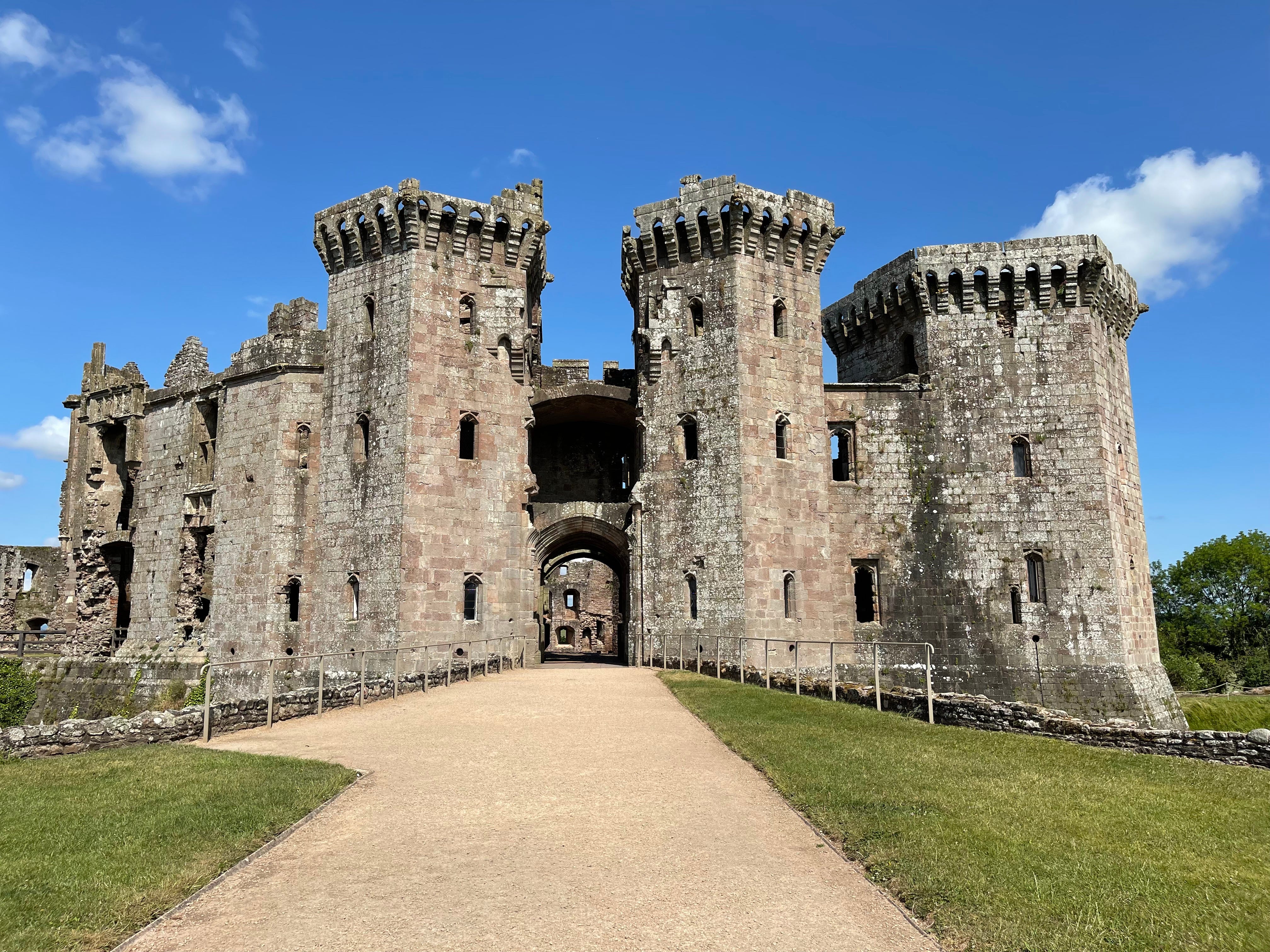
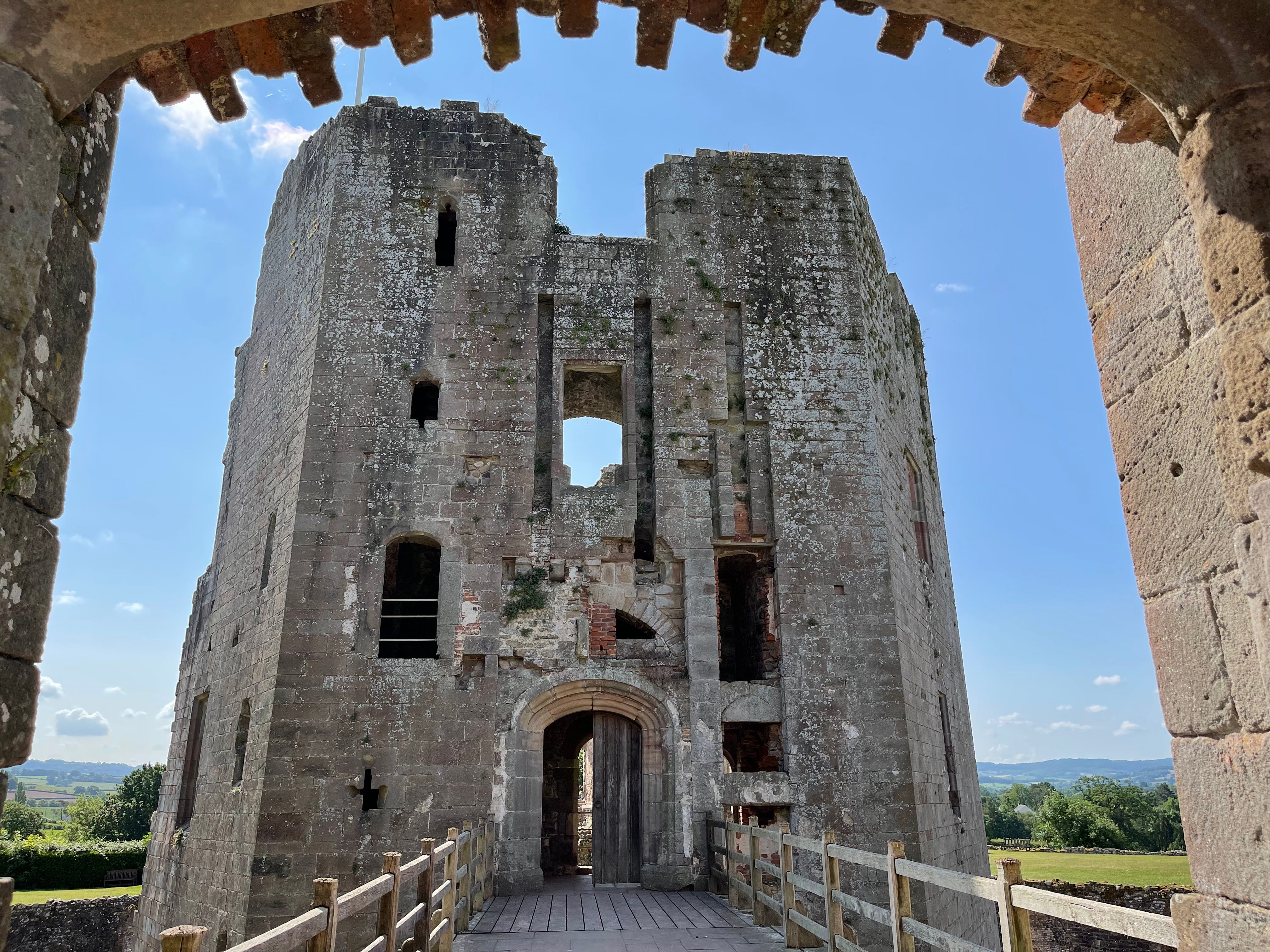
Probably the most recognisable part of the castle, William Herbert’s Gatehouse is imposing, impressive and beautiful. Originally accessed via a drawbridge, visitors now approach the gatehouse with its two, half octagonal, 4-storey towers, over a solid two-arched bridge. The constable of the castle would have occupied the rooms on the upper floor. The castle was built for defence, with a ditch and canon holes, its design possibly influenced by William Herbert’s time serving in France. Along the top of the towers are arched openings called machicolations from which projectiles could be dropped on invaders. These were both practical and in keeping with what would be expected on a castle, although they were different to the crenellations more usually found on castles in England and Wales.
The Pitched Stone Courtyard
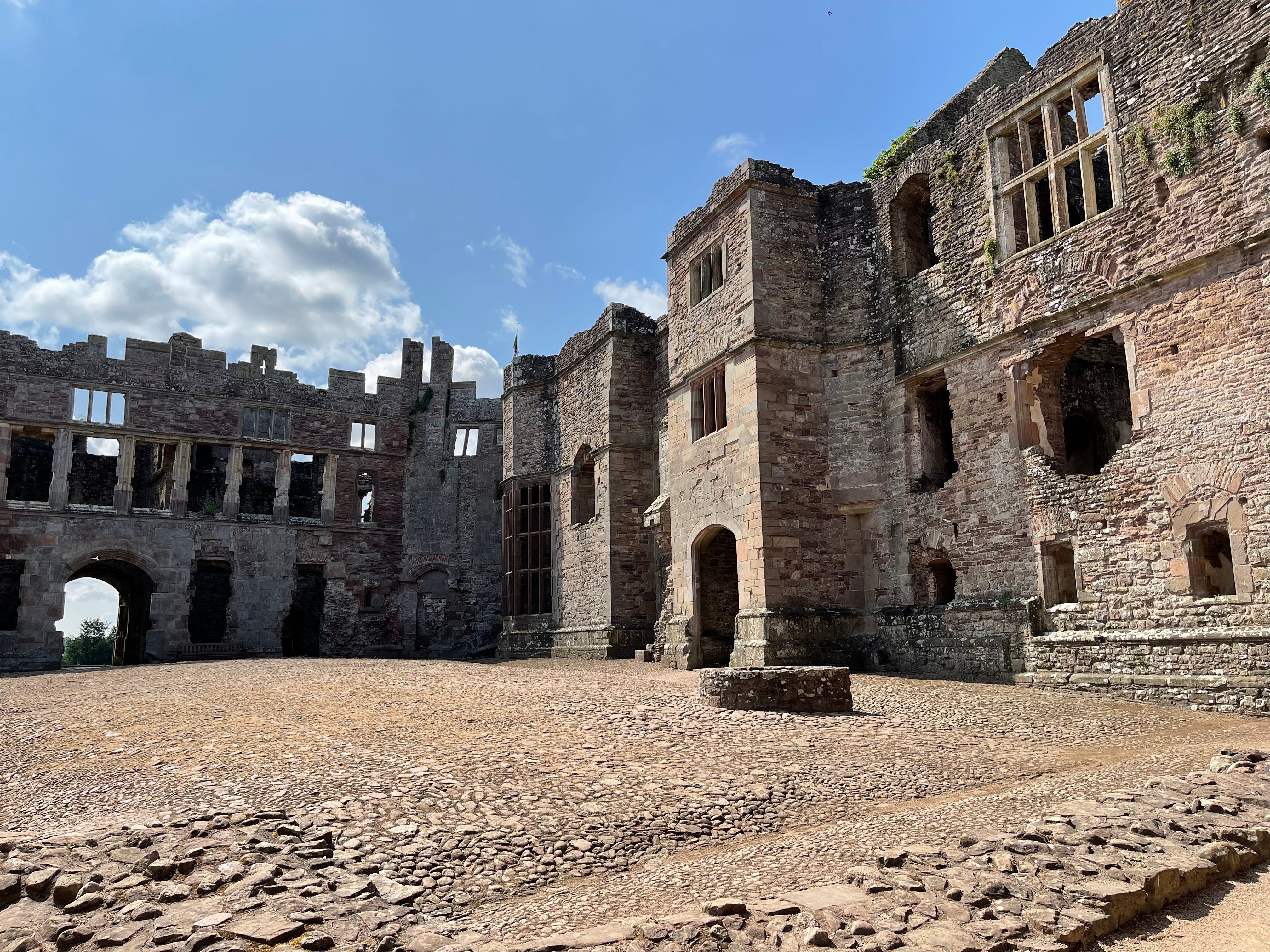
On passing through the Gateway the visitor enters what is known as ‘The Pitched Stone Courtyard.’ This was largely where the service areas for the castle would have been found; the kitchens, pantry, cellars, brewhouse and alike. The cobblestones here date to the Tudor period. There is a large range of spaces to explore where ovens, stairwells and ornate fireplaces can still be seen. This service wing is divided from the rest of the castle by the Great Hall, seen on the right of the image below.
The Great Hall
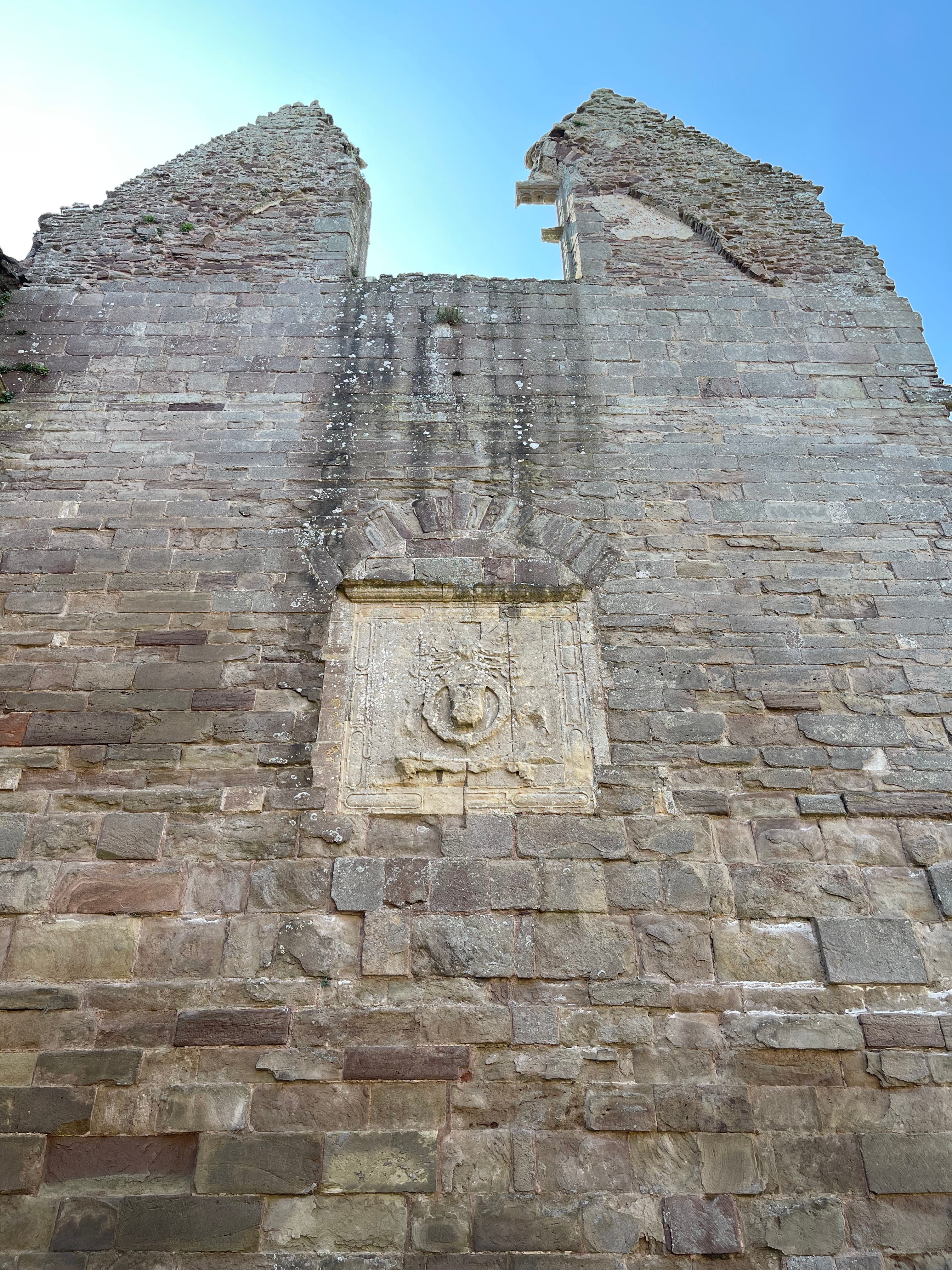
The Great Hall may look unremarkable to today’s visitors, although its size, number of windows and great fireplace do give a nod to its one-time grandeur, but there is a wonderful surviving feature in here. Above the dais, once lit by a large oriel window, are the weathered remains of the coat of arms of the third Earl of Worcester, William Somerset (d. 1598), a knight of the Garter.
Fountain Court
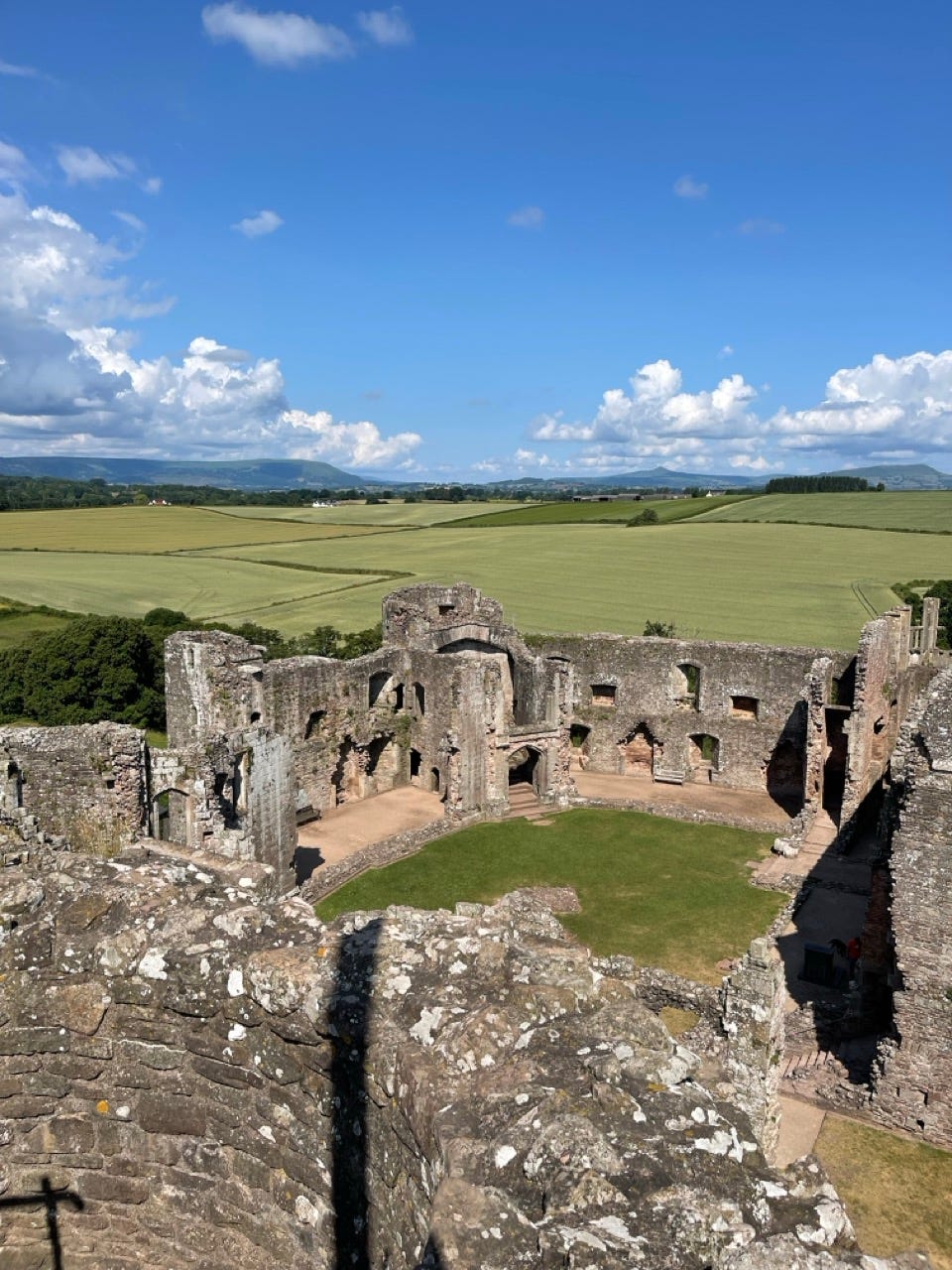
Beyond the Great Hall is Fountain Court, so named because of a marble fountain in the centre, called the White Horse, which continually ran with clean water. Unfortunately only the base of the fountain has survived to today.
This was the domestic wing of the castle, with four grand, impressive and very comfortable suites of living accommodation. The Grand Staircase, the porch entrance to which can be seen in the centre of the image below, led to two of these. It is also from Fountain Court that a bridge leads to the Great Tower, the self-contained keep with its own moat and, once-upon-a-time, double drawbridge. In here there is all a family may need to hold out during an attack; sleeping spaces warmed by fires, a latrine on each level, a kitchen in the basement which also contained a well.
The Great Tower
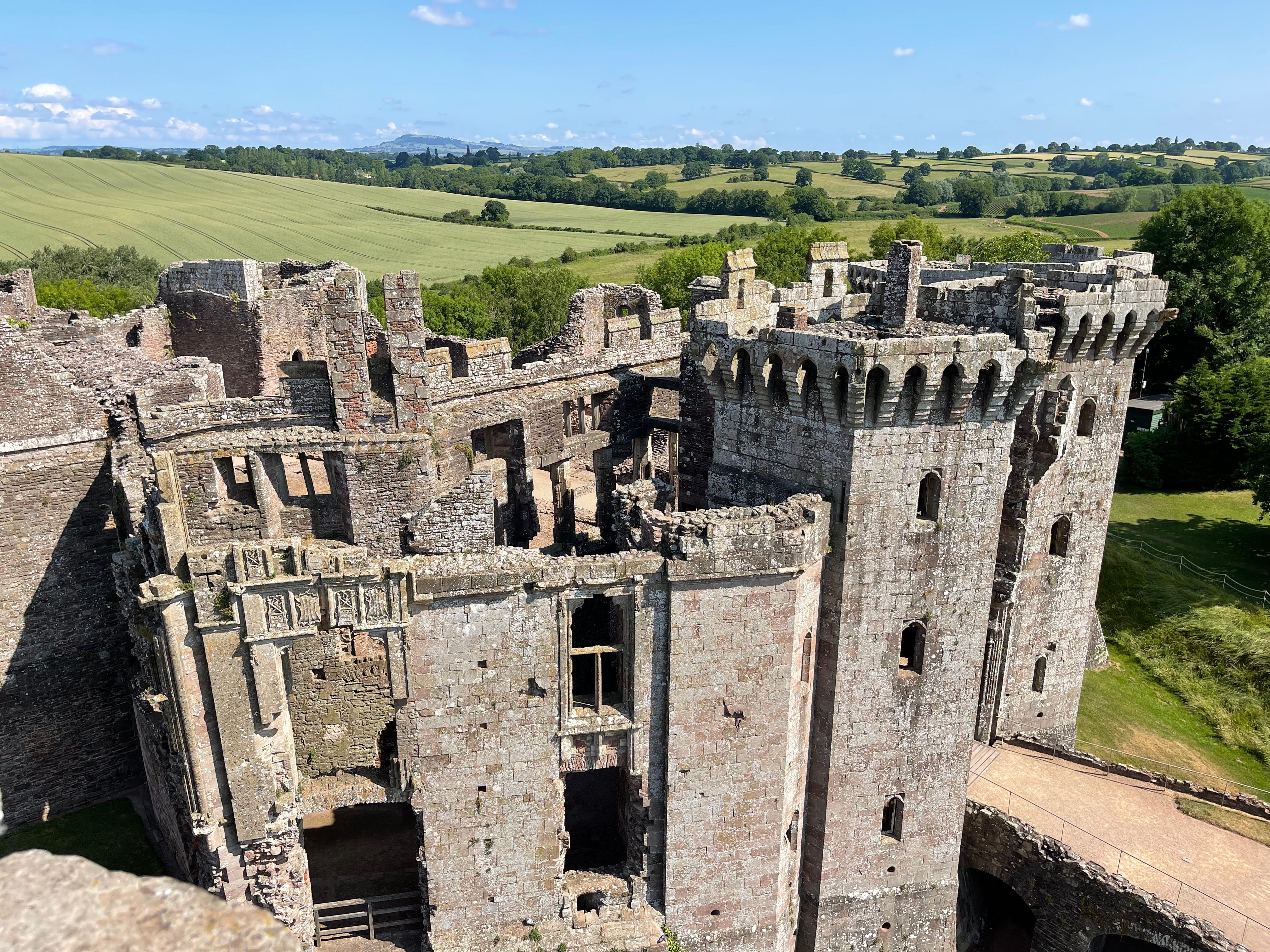
This hexagonal keep was not just built as a stronghold in case of attack, it was the ultimate status symbol, a visible sign to everyone in the surrounding area of the power and status of the family who lived here. After the siege of 1646, during the brutally destructive English Civil Wars, and the castle’s surrender to the Parliamentary forces the tower was reduced in height by 1-storey, from 5 to 4. The tedious manual work this required was abandoned and the tower was undermined to cause further ruin and impotence as a defensive structure. The east side collapsed, creating a cut-through view of the internal structure.
From the Great Tower, wonderful views of the State Apartments, those probably used by the family, are available. There is a fabulous view from this vantage point of the badges and shields carved into the masonry above one of the state apartment windows, giving a glimpse of the splendour and quality of decoration that this castle would have enjoyed. The badge depicts a Bascule Bridge, a badge used by the Herbert family, and the shield, now colourless, likely had the family’s coat of arms painted onto it. There are 4 panels, the badge and shield pairing being depicted twice.
This is by no means and exhaustive list of the features of Raglan Castle available to the visitor today but it is enough for you to see just how much there is and how worthwhile a visit here would be.
Thank you for reading! Please share with a history loving friend or onto your social media and tag @BritishHistoryTours for a mention back.
Until next time, take care and have fun!
Philippa 💜
P.S.
For further photographs (below) and a suggested itinerary of the area (coming out in a separate post), become a paid subscriber*. By people choosing to become paid subscribers, British History can continue to tell stories and share information for the history lover. So, if you can afford it, please support my work and I will say thank you by sharing exclusive content with you.
*(if you are a member of my Patreon your upgrade Substack is included as part of your membership - please message me there if yours has not yet been set up).
